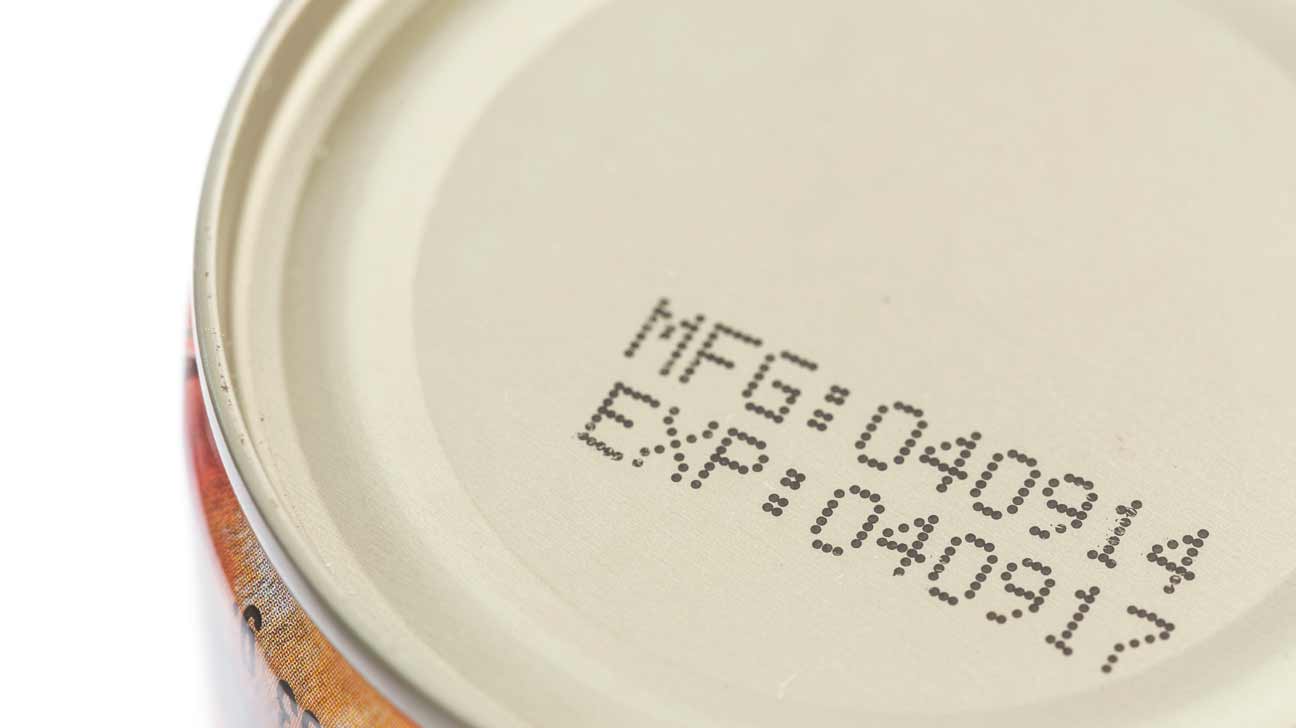
Surprisingly, the United States doesn’t operate under a uniform regulatory system for their food products. The U.S. Department of Agriculture, as of 2010, only requires and oversees expiration dates on foods consumed by children – like baby foods and infant formula. The other foods? Their regulations on dating food products are entirely at the whim on individual manufacturers.
Undoubtedly, this can be confusing for the average consumer. Which dates, labels and codes should we look at, care about or ignore completely? Here, we’ve compiled and clarified the clutter to help you maximize your food’s nutrient content and minimize unnecessary food (and financial) waste!
Expiration Dates 101

Unknown to many, expiration dates on both food and drinks are not legally regulated by the Federal Administrators. With the exception of infant formula, dates printed on food containers disclosing when you should buy, consume or toss a product are dependent on individual manufacturers’ regulations. Even worse, there is no standardization on what needs to be printed on products or homogenization between product types.
Sell-By
The “sell-by” date is exclusively for store use. This date lets employers know how long a product is legally allowed to stay on the shelf. For consumers, you should always buy food items before this date passes.
Best Is Used Before/By
The “best if used before or by” is used to specify when a product is at its peak freshness. Importantly, this is not indicative of the safety of the food item. It’s best to both buy and use the product before this date to ensure that the quality of the product is at its highest.
Use-By
“Use-by” explains the date in which the product will begin deteriorating and digress in its freshness, quality, and flavor. This, notably, has nothing to do with safety! In fact, consuming the product a few days late won’t harm you – it’s simply a benchmark to ensure you ingest the product according to its original and packaged standards.
Closed or Coded Dates
“Closed or coded dates,” contrary to popular belief, are not related to “use-by” dates in any facet. Rather, these are packing codes used to track when a package has manufactured, filled and shipped. In other words, they have no concrete or helpful use for the average consumer.
Making Your Own Food Rules: Your Plan of Action
Sure, the numbers are important. But that doesn’t mean that we ought to forego proper food storage sensibilities! Food spoilage is equally dependent on storing conditions as it is on it’s calculated shelf life. Maximize your food’s taste and longevity with these simple, effective tips you can incorporate today!
1. It’s All About Temperature
Ensure that your fridge is set at or below 40 degrees and the freezer set below 0 degrees Fahrenheit. In the event that your temperature dial doesn’t have exact temperatures noted, simply place a thermometer in the center of your refrigerator overnight for a more accurate reading and make adjustments accordingly.
2. Unpack Immediately
Upon returning from the grocery store, make a beeline to the refrigerator or freezer with your perishable goods or pre-cooked foods within roughly two hours. If you’re out and about before heading back home, pack a cooler in your trunk to store foods in the interim.
3. Never Let It Linger
Avoid, at all costs, eating sliced meat, poultry, milk, and eggs if they’ve been out for more than two hours. The reason? These foods spoil quickly and aren’t easily brought back to their original, fresh state. As for cooked, prepared foods, it’s best to chuck leftovers out after three or four days in the fridge.
4. Go With Your Gut
Expiration dates aren’t fact, they’re guidelines. Never rely solely on the numbers, instead, figure out for yourself and trust your judgment. The easiest way? The classic, dependable sniff test!
Sources:
http://greatist.com/health/meaning-expiration-dates
http://www.livestrong.com/article/277590-how-to-read-food-expiration-date-codes/
Image Sources:
http://img2.timeinc.net/people/i/2015/greatideas/blog/150504/usda-600×450.jpg
https://www.youtube.com/watch?v=F549pTJyUN0
https://media.consumeraffairs.com/files/news/milk-date.png
http://tabletalk.safeway.ca/wp-content/uploads/2016/06/Best-Before-Date.jpg
www.healthline.com/hlcmsresource/images/News/052316_expirationdate_BODY.jpg