

Whether you’re an awkward 18-year-old or well into your 30’s, acne can cause self-consciousness and frustration. The good news is that learning what type of acne you have, and how to treat it, can help you feel a little less hopeless when yet another annoying spot appears on your face.
According to the infographic below, over 90 percent of teens get acne, likely due to an increase of hormones called androgens during puberty. When there are more androgens in the body, the skin’s oil glands grow and produce more sebum, an oily or waxy substance that coats the skin and hair.
Sebum has a protective function, keeping the skin and hair hydrated among other things, but it can also block sebaceous gland ducts and lead to comedones, commonly known as whiteheads and blackheads. Add bacteria into the mix, and you have inflamed pimples galore.
Different Types of Acne
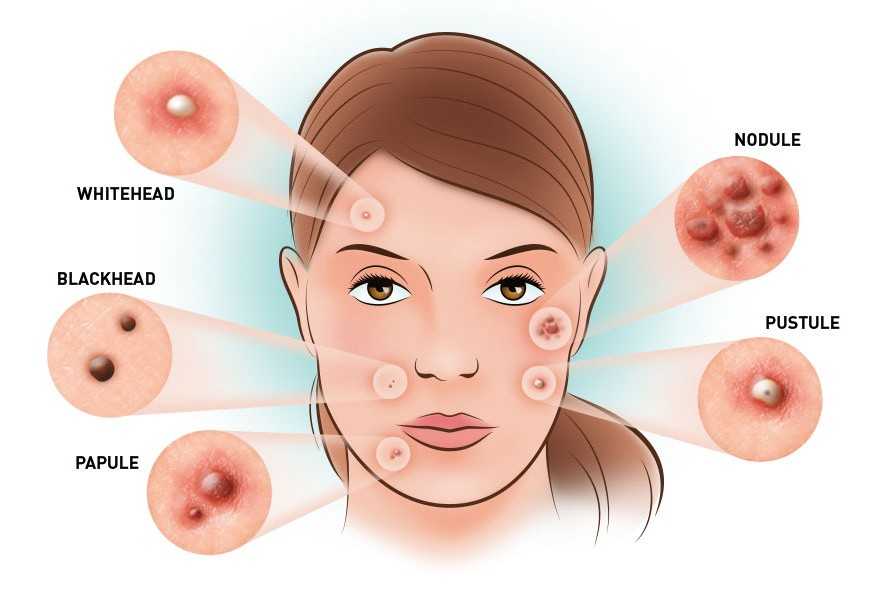
Other types of acne include seborrhea, a condition involving scaly red patches on the skin; papules, which are small solid pimples that appear inflamed; and pustules, which contain fluid or pus. Then there are nodules or the term for large papules: While whiteheads and blackheads are caused by dead skin cells, oil, and dirt blocking pores, papules and pustules are a little worse, caused by the pore walls breaking open.
If you have mild acne, or whiteheads and blackheads, make sure you don’t pick at them as it could cause scarring or more oil to enter your pores. Check with your dermatologist first, but eating healthy foods, like fish, leafy greens, whole grains, carrots, and sweet potatoes — and avoiding fatty, greasy fast foods — can help clear up your face. And don’t forget to drink a lot of water.
For moderate acne, you may suffer from more inflammatory pimples, like papules, pustules, and nodules that are more visible than mild acne. In addition to eating the healthy diet mentioned above, you may need to visit your general practitioner or dermatologist to be prescribed oral antibiotics, like doxycycline or tetracycline. Sometimes you may also need to use topical treatments to cleanse, tone, and moisturize your skin.
Severe acne sufferers often experience deep, painful, inflamed cysts, papules, pustules, and nodules. They may also have scars and a rough or irregular skin surface. In addition to diet and topical treatments, severe acne sufferers may have to use Isotretinoin, a Vitamin A derivative that is used to treat really bad acne. Isotretinoin decreases sebum, bacteria, and swelling on your skin, and also works to avoid follicle clogging. You should visit your dermatologist first, but other treatments include chemical peels and photodynamic therapy.
It’s difficult for severe acne to go away on its own, and the common beliefs of using toothpaste to dry it out, popping those pimples, or simply washing your face more are just myths and can actually cause more damage. Acne can be caused by a lot of different things even well into adulthood, from your diet to how much you’re making out with someone, but it doesn’t have to be an insurmountable condition.

This article is shared with permission from our friends at medicaldaily.com.


